Wasps in Your House? How to Find a Hidden Wasp Nest in Walls, Soffits and Attics
Finding a wasp inside your home can be unsettling. Finding several wasps every day is a different problem altogether. If wasps are repeatedly appearing inside your house, particularly around windows, ceilings, light fixtures, vents, or upper floors, there may be a hidden wasp nest inside a wall, soffit, attic, or another enclosed space. Unlike an exposed nest hanging from a tree or porch, hidden wasp nests can be difficult to locate. You may see the wasps entering and exiting your home without ever seeing the nest itself. For homeowners in Burlington, Oakville, Milton, Halton Hills, Hamilton, and surrounding areas, understanding where wasps hide and how they gain access to a home can help prevent a small problem from becoming a much larger one.
Why Are Wasps Getting Inside My House?
Wasps don't normally want to live inside the occupied areas of your home. If you are seeing them indoors, they may have established a nest somewhere within the structure or found an opening that allows them to enter from an outdoor nest.
Common entry and nesting locations include:
Wall cavities
Soffits and fascia
Attics
Roof overhangs
Around vents
Behind siding
Around windows and doors
Chimneys
Garages and sheds
Under decks and porches
Gaps around utility lines and pipes
Small gaps around the exterior of a house can provide enough access for wasps to enter an enclosed space. Once a colony becomes established, individual wasps may find their way into the living areas of the home. Seeing one wasp indoors doesn't necessarily mean there is a nest inside your house. Wasps may occasionally enter through an open window or door. However, repeated wasp activity in the same area is a warning sign that should not be ignored.
Signs You May Have a Wasp Nest Inside a Wall
A hidden wasp nest can be much harder to identify than an exposed nest. One of the most obvious signs is seeing wasps repeatedly entering or leaving a small opening on the exterior of your home.
Look for wasp activity around:
Soffit vents
Roof lines
Fascia boards
Siding
Brick openings
Exterior vents
Window frames
Utility penetrations
Gaps around doors
Cracks or openings in exterior walls
You may also notice wasps appearing indoors in the same room repeatedly. For example, if you continually find wasps near an upstairs window, ceiling light, or attic access point, the source may be located somewhere above or behind that area.
Hearing buzzing in the wall
In some situations, homeowners can actually hear buzzing coming from inside a wall. This can occur when a colony has established itself inside a wall cavity. The sound may be more noticeable during periods of high wasp activity. However, don't start cutting into walls or removing siding to locate the nest yourself. Disturbing a concealed colony can cause defensive wasps to emerge from openings into the home.
Wasps in the Soffit: A Common Problem
Soffits are particularly attractive locations for some wasps because they provide protected, enclosed spaces with relatively easy access to the exterior. A homeowner may notice wasps repeatedly flying underneath the roof overhang but never see a conventional nest. This doesn't mean there isn't a nest. A colony can be located behind the soffit or inside another part of the roof structure. The visible wasps may simply be using a small opening as their entrance and exit point. If you notice consistent wasp traffic around your soffits, roofline, or fascia, it is worth having the area inspected before attempting to seal the opening. Sealing an active entrance without addressing the nest can make the problem worse. Wasps may search for another way out, potentially pushing further into the structure or finding an opening into the house.
Wasps in the Attic
Attics provide many of the characteristics wasps look for when establishing a protected nesting location.
They can provide:
Shelter from weather
Protection from predators
Undisturbed areas
Access to exterior openings
Warmth during the summer
Wasps may gain access through roof vents, soffits, damaged screening, gaps around flashing, or other openings. If you regularly find wasps near an attic hatch, upper-floor windows, or ceiling fixtures, the source may be located in or around the attic. An attic inspection can help determine whether the insects are entering from outside or whether a nest has actually been established within the structure.
What Type of Wasp Is Inside My House?
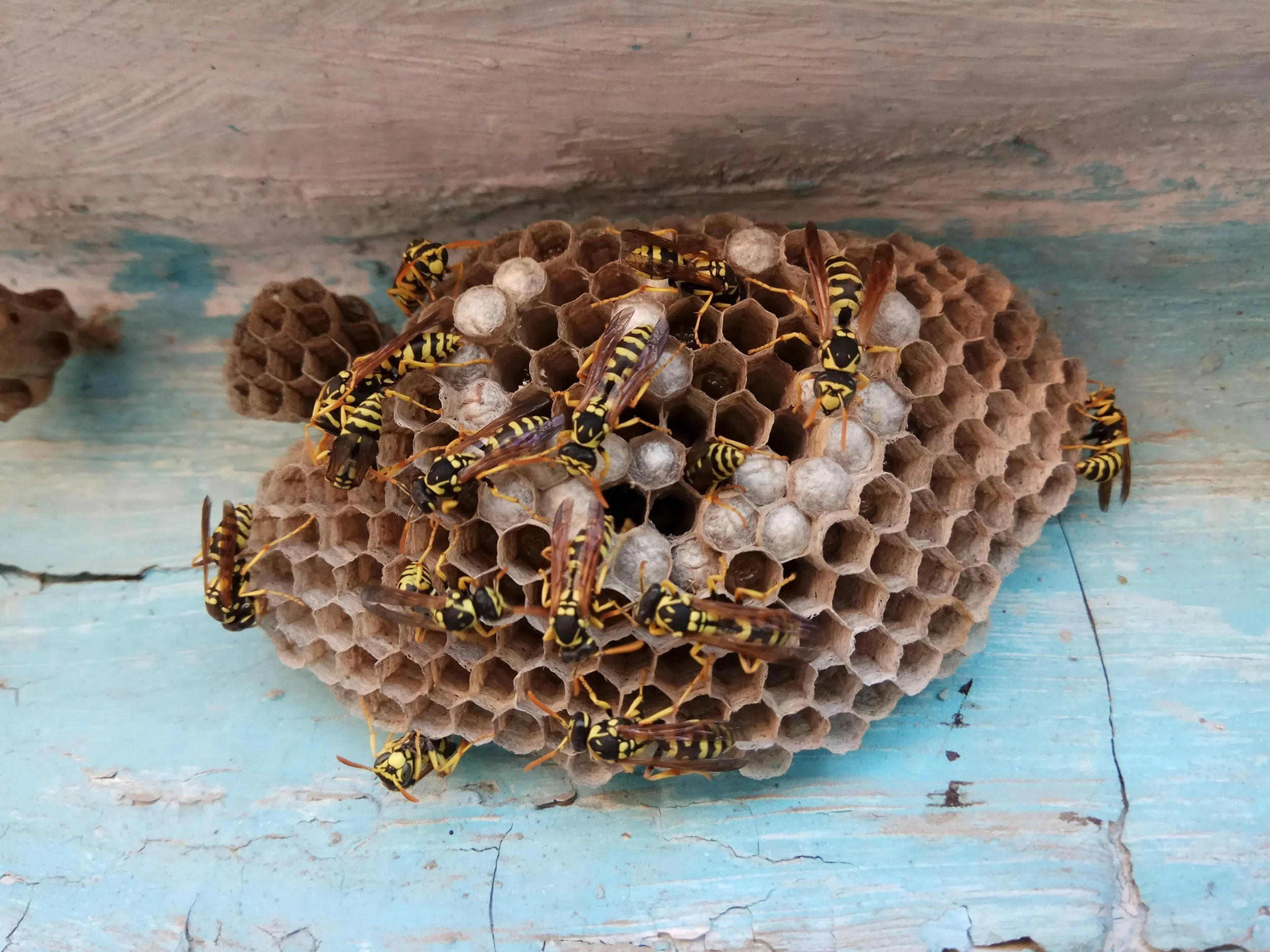
Not every wasp problem looks the same. Ontario homeowners commonly encounter several types of social wasps, including paper wasps, yellowjackets, and hornets. Their nesting habits and behaviour can differ significantly. Paper wasps commonly construct exposed, open nests under protected areas such as eaves, porch ceilings, and other structures. Yellowjackets can establish nests in concealed locations, including wall cavities and underground spaces. Some hornets construct large enclosed nests in trees or other elevated locations.
Correct identification can help determine where to look for the nest and how the situation should be handled. It is also important to make sure the insect is actually a wasp. Some homeowners mistake bees or other beneficial insects for wasps, particularly when they are flying around a building.
Why You Shouldn't Seal a Wasp Nest Inside a Wall
One of the most common reactions to finding wasps entering a wall or soffit is to simply seal the opening. That may seem logical, but it can create another problem if the colony is still active. If wasps can no longer use their original entrance, they may attempt to find another exit. If there is a path into the interior of the building, that can potentially result in increased wasp activity inside the home. The first priority should be determining where the colony is located and whether it is active. Once the nest has been dealt with, exterior openings can be repaired as part of a longer-term wasp prevention strategy.
Can You Remove a Wasp Nest Yourself?
Exposed, small nests can sometimes appear easy to deal with. The problem is that homeowners often cannot determine how large the colony is or whether additional nest material is hidden inside a structure.
Social wasps defend their nests, and the level of defensive behaviour can increase as colonies become established. Our recommendation is to assess the nest location and colony size before deciding how to manage a stinging-insect problem. Most nest removals are simple, however that is not always the case.
DIY removal becomes particularly concerning when:
The nest is inside a wall
Wasps are entering the house
The nest is inside a soffit or attic
The nest is high above the ground
The nest is underground
There are large numbers of wasps
The nest is located beside a doorway or frequently used area
Someone in the household has a serious insect-sting allergy
In these situations, professional wasp nest removal is often the safer option.
How Professional Wasp Nest Removal Works
The first step is identifying where the wasps are coming from.
A professional inspection can help determine:
What type of stinging insect is present
Whether there is an active nest
Where the nest is located
How the insects are accessing the structure
Whether the nest is exposed or concealed
What steps are needed to prevent the problem from returning
Treatment can then be tailored to the location of the colony. This is particularly important for nests inside wall cavities, soffits, attics, and other inaccessible areas where simply removing a visible nest may not solve the underlying problem.
How to Prevent Wasps From Nesting in Your Home
Once an active nest has been eliminated, prevention becomes an important part of long-term wasp control.
1. Seal exterior gaps
Inspect the exterior of your home for small openings around:
Soffits
Fascia
Windows
Doors
Vents
Utility lines
Pipes
Siding
Roof penetrations
Repair damaged screens and seal appropriate openings once you are certain there is no active nest behind them.
2. Inspect soffits and rooflines
Pay particular attention to areas where different building materials meet. Small gaps around soffits, fascia, siding, and roofing components can provide access to protected spaces.
3. Keep garbage securely closed
Wasps are attracted to food sources, particularly sweet foods and other organic material. Keep garbage and recycling containers closed and clean up spills promptly.
4. Clean up outdoor food and drinks
Sweet beverages, fruit, meat, and food scraps can attract wasps to patios and outdoor entertaining areas. Keeping outdoor eating areas clean can reduce the amount of food available to foraging wasps.
5. Inspect your property early in the season
Small nests are considerably easier to identify than large, established colonies. Check sheltered areas around your home regularly, particularly under eaves, decks, porches, sheds, and other protected structures.
6. Don't ignore repeated wasp activity
If you see one wasp, it may simply be passing through. If you see wasps repeatedly using the same opening, however, there may be a nest nearby. The earlier you identify a potential nesting site, the easier it can be to address.
When Should You Call a Professional for Wasp Removal?
You don't have to wait until there are hundreds of wasps around your home.
Consider professional wasp removal if you:
Find a nest inside your home
See wasps entering a wall or soffit
Hear buzzing inside a wall
Find wasps repeatedly indoors
Discover a nest near a door or walkway
Find a nest in an attic or roof structure
See significant wasp activity around your property
Cannot determine where the wasps are coming from
Have previously had wasps nesting in the same area
A hidden nest can continue growing while the visible problem appears relatively minor.
Wasp Nest Removal in Halton Region and Hamilton
If you have discovered a wasp nest in your home, wall, soffit, attic, garage, shed, or yard, Expert Wildlife Removal and Pest Control can help identify the source and determine the appropriate solution. We provide professional wasp nest removal and prevention services throughout Halton Region and the surrounding area, including Burlington, Oakville, Milton, Halton Hills, Flamborough, and Hamilton.
Don't wait until wasp activity becomes a serious problem. If you are seeing wasps repeatedly around your home or finding them inside, contact us to arrange an inspection and professional wasp removal.
Frequently Asked Questions About Wasps in Houses
Why are wasps getting inside my house?
Wasps may enter through small openings around windows, doors, vents, soffits, siding, rooflines, and utility penetrations. Repeated activity can indicate a nest in or near the structure.
Can wasps build a nest inside a wall?
Yes. Some social wasps, particularly yellowjackets, can establish nests in enclosed areas such as wall cavities and other protected spaces.
How do I know if I have a wasp nest in my wall?
Repeated wasp activity around the same exterior opening, wasps appearing indoors in the same area, or buzzing sounds coming from a wall can indicate a hidden nest.
Should I seal a hole where wasps are entering?
Do not automatically seal an opening if you suspect an active nest is inside. The colony should be addressed first, followed by appropriate exclusion and repairs.
Will wasps come back after a nest is removed?
Wasps may return to an area that provides suitable shelter and access. Identifying and correcting the conditions that allowed the nest to establish can reduce the likelihood of future problems.
Who removes wasp nests in Halton Region?
Expert Wildlife Removal and Pest Control provides professional wasp nest removal and prevention services in Burlington, Oakville, Milton, Halton Hills, Flamborough, Hamilton, and surrounding areas.
Don't Let a Hidden Wasp Nest Become a Bigger Problem
If wasps are repeatedly entering your home, don't assume they will simply disappear. A hidden colony can be difficult to locate and dangerous to disturb. Professional identification, nest removal, and exterior prevention can help protect your home and reduce the chance of another wasp problem.
Contact Expert Wildlife Removal and Pest Control for professional wasp nest removal in Halton Region and surrounding areas.